
15 Proven Freelancing Tips to Earn More & Get Better Clients (2026 Guide)
Freelancing tips are practical strategies that help independent professionals increase their income, attract better clients, and build a sustainable freelance business. In 2026, freelancing is more competitive than ever. AI tools are accelerating productivity, global talent pools are expanding, and clients now prefer specialists over generalists. Simply having a skill is no longer enough — positioning, systems, and results matter more than ever.
This guide is for serious freelancers who want consistent income, higher-quality clients, and long-term growth instead of unpredictable gigs. Whether you work through platforms or independently, these proven freelancing tips will show you how to stand out in a crowded market.
By the end, you’ll understand how to price strategically, secure better clients, and turn your freelance career into a profitable, scalable business.
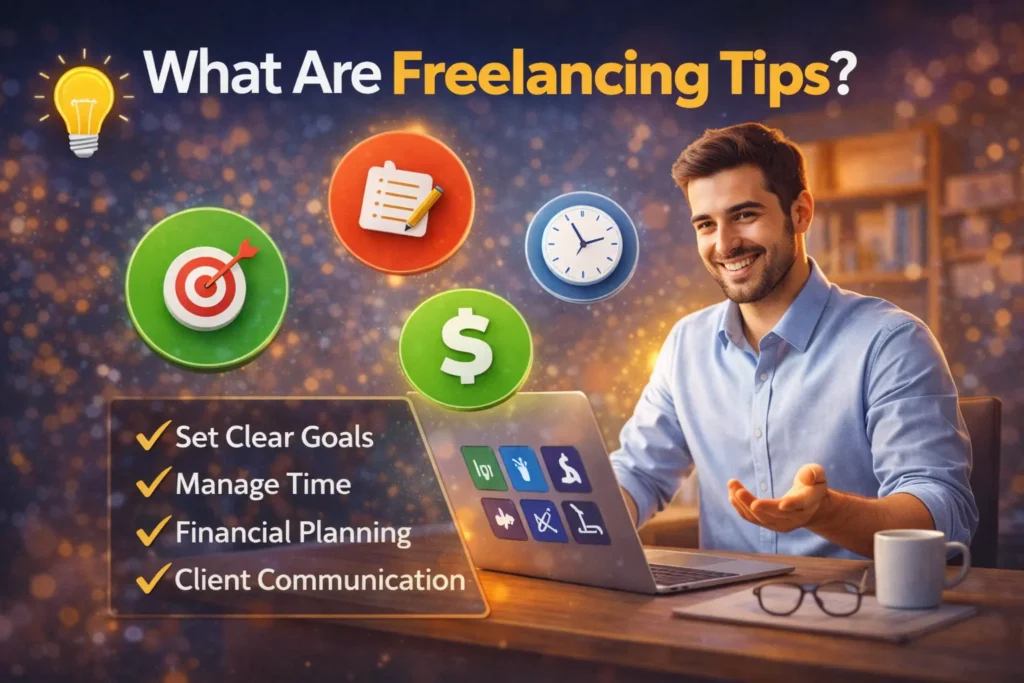
What Are Freelancing Tips?
Freelancing tips are proven strategies and business practices that help freelancers increase income, attract high-paying clients, manage projects efficiently, and build a sustainable freelance career. These tips focus on positioning, pricing, client acquisition, workflow systems, financial management, and long-term growth in a competitive global market.
Define a Clear and Profitable Freelance Positioning
One of the biggest mistakes freelancers make is trying to offer everything to everyone. In 2026, generalists struggle. Specialists earn more. Clear freelance positioning means knowing exactly:
- Who you help
- What problem you solve
- What result you deliver
When your positioning is specific, clients trust you faster and are willing to pay premium rates.

Skill Stacking to Increase Value
Skill stacking means combining two or three complementary skills to become more valuable. Examples:
- SEO + Copywriting
- Web Development + Conversion Optimization
- Graphic Design + Brand Strategy
- Paid Ads + Funnel Building
Individually, these skills are common. Combined, they create premium positioning.
Clients don’t just want task executors. They want problem solvers.
Niche Selection Strategy
Choosing a niche doesn’t mean limiting yourself. It means focusing your expertise. Use this 3-part filter:
- Skill Strength – What are you genuinely good at?
- Experience Edge – Do you have industry background others don’t?
- Market Demand – Are clients actively paying for it? The intersection of these three creates a profitable niche.
Instead of: “I’m a freelance marketer.” Position yourself as:
“I help eCommerce brands increase revenue through conversion-focused email marketing.” Specificity builds authority.
The Positioning Formula
Use this framework:
I help [specific audience] achieve [specific result] through [specific skill or system].
Example:
I help SaaS startups increase demo bookings through conversion-focused landing pages. Clarity attracts the right clients.
The right clients pay better.
Market Demand Validation
- How many active job listings exist?
- What are average project budgets?
- What skills are most requested?
On LinkedIn, search professionals in your niche and analyze:
- How they position themselves
- Which industries hire them
- What type of content they post
If clients are consistently paying for a service, it’s viable.
Build a Portfolio That Sells Results, Not Skills
Most freelancers list services.
High-earning freelancers prove results.
Clients care about outcomes, not capabilities.
Your portfolio should answer one question:
Can you deliver measurable results?

Use the Before/After Model
The brain responds strongly to transformation.
Show:
Before → Low engagement, weak branding, poor conversions
After → Higher traffic, stronger positioning, increased revenue
Transformation creates trust.
Case Study Framework That Converts
Structure each project like this:
- Client Background – Who were they?
- Problem – What challenge were they facing?
- Solution – What did you implement?
- Result – What measurable outcome did you achieve?
Example results:
- Increased conversions by 34%
- Reduced ad cost by 22%
- Grew organic traffic by 48% in 6 months
Numbers build credibility instantly.
Proof Psychology - Why This Works
When hiring freelancers, clients ask themselves:
- Has this person solved this before?
- Can they deliver consistently?
- Is there social proof?
Your portfolio should reduce perceived risk. The more proof you provide, the easier it becomes for clients to say yes
Strategic Testimonial Placement
Don’t bury testimonials. Place them:
- Immediately after a case study
- Near pricing sections
- On your LinkedIn profile
A strong testimonial includes:
- Specific results
- Client’s name or company (if permitted)
- Mention of professionalism or reliability
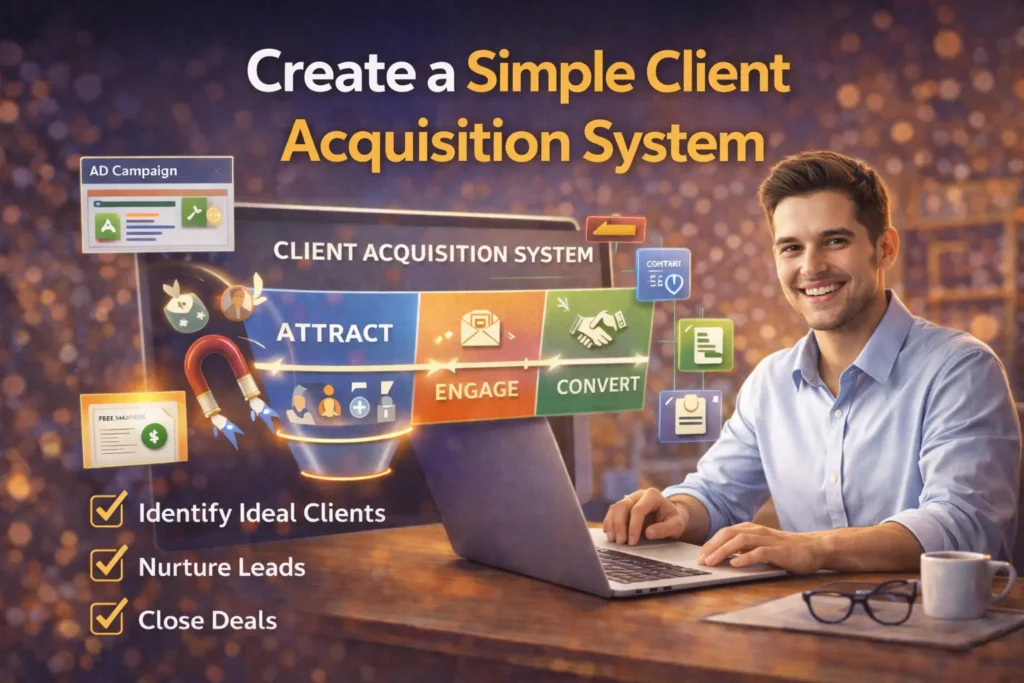
Create a Simple Client Acquisition System
Freelancers fail when they rely on luck.
They grow when they rely on systems. If you want consistent freelance income, you need a repeatable client acquisition process — not random outreach. Think in terms of weekly actions, not motivation.
Cold Outreach Framework
Cold outreach still works in 2026 — but only when it’s personalized and value-focused. Use this simple structure for email outreach:
Subject: Quick idea for [Company Name]
Hi [Name],
I noticed [specific issue or opportunity].
I help [target audience] achieve [specific result].
Recently, I helped [similar client] achieve [measurable result].
Would you be open to a quick 15-minute call to explore this? Best practices:
- Keep it under 120 words
- Focus on results, not your resume
- Personalize the first line
- Avoid attachments in first email
Short, clear, and problem-oriented messages get replies.

LinkedIn Authority Strategy
- Mini case studies
- Industry breakdowns
- Results from projects
- Strategic insights
- Lessons learned
Authority builds trust.
Trust builds inbound leads. Instead of pitching constantly, show expertise publicly. High-paying clients prefer specialists who demonstrate knowledge.
Proposal Structure That Converts
-
When applying for jobs (especially on platforms), structure matters. Use this 5-step format:
- Reference something specific from the job post
- Show you understand the core problem
- Briefly explain your approach
- Share one relevant proof example
- End with a clear next step
Example closing:
“Would you be open to a short call to align on expectations?” Generic proposals blend in. Specific proposals stand out.
Use CRM Tools to Stay Organized
-
Track your outreach and pipeline using simple CRM systems like:
- Notion
- Trello
- Asana
- Even a spreadsheet
Your CRM should track:
- Leads contacted
- Replies received
- Calls booked
- Proposals sent
- Deals closed
Weekly tracking creates predictable growth.
Follow-Up Cadence
-
Most freelancers never follow up — and lose opportunities. Use this system:
- Day 1 – Initial message
- Day 4 – Friendly follow-up
- Day 7 – Final check-in
Keep follow-ups short and professional.
Weekly System Thinking
-
Instead of hoping for clients, set weekly targets:
- 10 personalized outreach messages
- 2 LinkedIn posts
- 5 proposal submissions
- 1 follow-up cycle
Systems create stability. Stability creates confidence.
Price for Value, Not Just Time
Freelancers who charge for time cap their income. Freelancers who charge for results scale faster. Value-based positioning increases earning potential dramatically.
Hourly vs Project vs Retainer
Hourly Pricing
- Simple for beginners
- Easy to calculate
- Limits scalability
Project-Based Pricing
- Simple for beginners
- Easy to calculate
- Limits scalability
Retainer Model
- Monthly recurring income
- Strong client relationships
- Best for long-term stability

Tier Pricing Model
Offer three packages:
- Basic
- Standard
- Premium
Each tier should increase in value, not just deliverables.
Example:
Basic → Execution
Standard → Execution + Strategy
Premium → Execution + Strategy + Optimization Most clients choose the middle option.
When to Raise Rates
Raise rates when:
- Your calendar is consistently full
- You deliver measurable results
- Demand increases
- Your skills improve
Small incremental increases (10–20%) are easier than doubling prices overnight.
Review your rates every 6–12 months.
Anchor Pricing Psychology
Always present higher-priced options first.
When clients see a premium package, the mid-tier feels reasonable. This psychological anchor increases average deal size.Never apologize for your pricing.
Price reflects value, not hours.
Income Scaling Logic
Income grows when you:
- Increase value
- Improve positioning
- Add recurring revenue
- Reduce low-paying clients
- Optimize efficiency
Master Negotiation Without Undervaluing Yourself
Negotiation is a normal part of freelancing. Undervaluing yourself is not. Freelancers who earn more understand how to defend their rates confidently without appearing rigid or difficult.

Handling Low Offers Professionally
When a client presents a low offer, avoid reacting emotionally. Respond strategically. Example:
“Based on the scope and expected results, my standard rate for this type of project is $X. If needed, we can adjust the scope to align with your budget.”
This approach:
- Protects your value
- Keeps the conversation professional
- Shows flexibility without discounting
Never reduce your price immediately. Adjust scope instead..
Rate Defense Framework
When justifying your rate, focus on value — not time.
Support your pricing with:
- Measurable past results
- Relevant experience
- A structured process
- Reduced risk for the client
Example:
“I’ve helped similar businesses increase conversion rates by over 30%. My process includes research, testing, and optimization to ensure measurable ROI.”
Scope Adjustment Strategy
If budget becomes an issue, reduce deliverables — not pricing integrity. You can remove:
- Additional strategy sessions
- Advanced optimization
- Extra revision rounds
- Ongoing support
Maintain positioning while offering flexibility.
Client Filtering Checklist
Not every client is worth accepting.
Before moving forward, evaluate:
- Is the budget realistic?
- Is communication respectful?
- Is the scope clearly defined?
- Are expectations reasonable?
- Are they open to signing a contract?
The wrong clients drain time and energy. The right clients accelerate growth.
Use Contracts to Protect Your Work and Income
Freelancing without a contract creates unnecessary risk.
Professional freelancers use written agreements to protect both themselves and their clients.

Essential Clauses
Every freelance contract should include:
- Clear project scope
- Deliverables
- Timeline
- Payment terms
- Revision policy
- Ownership terms
Clarity prevents misunderstandings.
Payment Structure (30–50% Upfront)
A strong payment structure typically includes:
- 30–50% upfront payment
- Remaining balance due before final delivery
- Clear payment deadlines
Upfront payment confirms client commitment and reduces risk.
Never begin substantial work without partial payment.
Intellectual Property (IP) Rights
Clearly define:
- When ownership transfers
- Whether rights transfer after full payment
- Whether you may display the work in your portfolio
Clarity protects both parties from future disputes.
Revision Limits
Unlimited revisions lead to unpaid work.
Specify:
- Number of included revision rounds (e.g., 2–3)
- Additional fees for extra revisions
Clear revision policies establish professional boundaries.
Late Fee Policy
Include a clause stating:
- Payment due within X days
- Late payments incur a predefined fee
This encourages timely payment and protects cash flow.
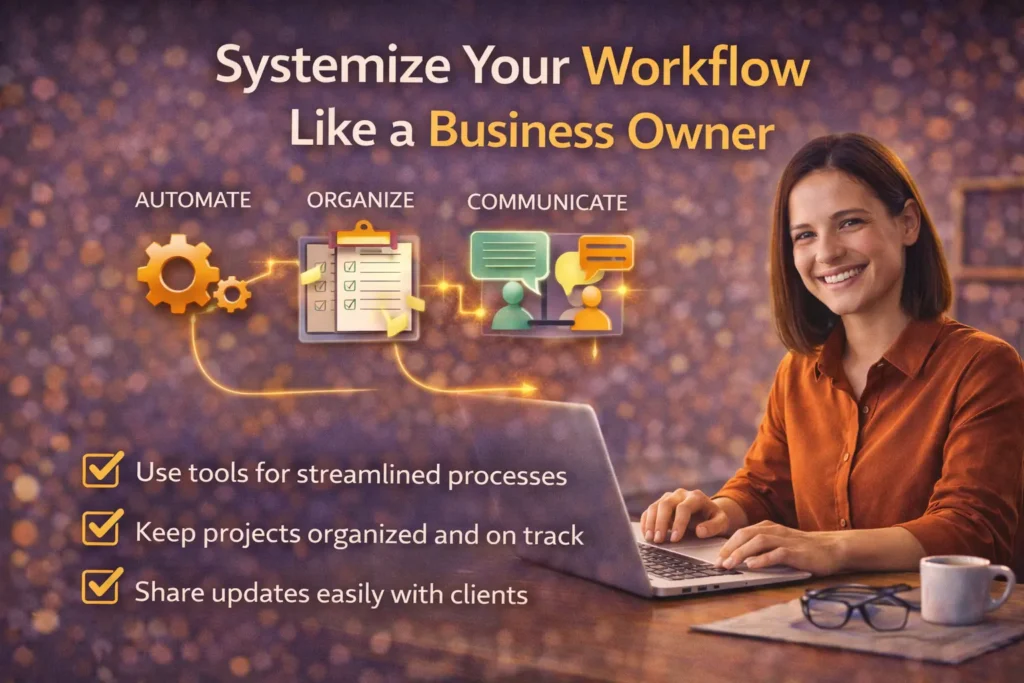
Systemize Your Workflow Like a Business Owner
Freelancers grow when they operate like businesses, not freelancers.
Systems reduce stress, increase efficiency, and improve profit margins.
Create a Project Pipeline
Track:
- Leads contacted
- Discovery calls booked
- Proposals sent
- Active projects
- Completed projects
Use tools such as:
- Notion for customizable dashboards
- Trello for visual kanban boards
- Asana for task and milestone tracking
A visible pipeline creates clarity and momentum.
Build an Onboarding SOP
Standardize the onboarding process:
- Send welcome email
- Send contract
- Issue invoice
- Collect project brief
- Confirm timeline
A repeatable onboarding process improves professionalism and efficiency.
Use a Delivery Checklist
Before submitting final work, confirm:
- All deliverables completed
- Quality reviewed
- Revisions addressed
- Final invoice included
Track time using Toggl.
Manage finances with QuickBooks.
Well-defined systems increase reliability and scalability.
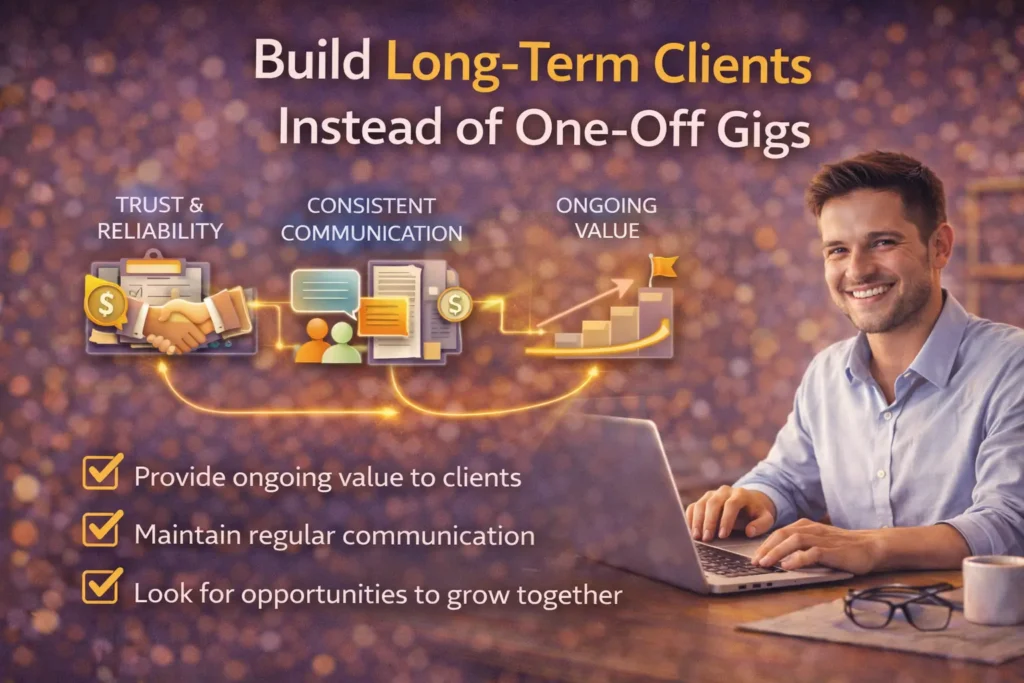
Build Long-Term Clients Instead of One-Off Gigs
One-off projects create income spikes. Long-term clients create income stability.
Retainer Strategy
Offer ongoing services such as:
- Monthly SEO optimization
- Ongoing content production
- Social media management
- Website maintenance
Position retainers as continued performance improvement rather than isolated tasks.
Example:
“To maintain and improve results, I recommend ongoing monthly optimization.”
Recurring income reduces financial volatility.
Client Retention System
Increase retention through:
- Regular progress updates
- Monthly performance reports
- Proactive improvement suggestions
- Fast response times
Retention is more cost-effective than constant client acquisition.
Upsell Structure
After delivering measurable results, propose the next logical step.
Example:
“Now that traffic has increased, the next opportunity is conversion optimization.”
Upsells should feel strategic — not forced.
Testimonial and Referral Script
After successful delivery:
“I’m glad you’re happy with the results. If you know anyone who could benefit from similar support, I’d appreciate an introduction. Also, would you be open to sharing a short testimonial?”
Warm referrals convert faster than cold leads.
Protect Your Time and Avoid Burnout
Freedom without structure leads to burnout. Sustainable freelancing requires boundaries, systems, and intentional time management.
High-performing freelancers protect their time as carefully as their income.

Use the Time Blocking Method
Time blocking increases focus and productivity.
Divide your day into specific blocks:
- Deep work (creative or strategic tasks)
- Communication (emails, client calls)
- Admin tasks
- Learning and skill development
Avoid multitasking. Focus on one type of task per block.
Structured time improves output and reduces stress.
Build Work-Life Systems
Create structure around your availability:
- Set defined working hours
- Establish response time expectations
- Limit the number of active projects
- Schedule rest days intentionally
When clients understand your structure, they respect it.
Consistency prevents exhaustion.
Create a Productivity Structure
Maintain productivity by:
- Starting each day with 3 priority tasks
- Tracking time spent on projects
- Reviewing weekly performance metrics
- Eliminating distractions during deep work
Freelancers who manage energy effectively outperform those who rely on motivation alone.
Use Boundary Scripts Professionally
Boundaries protect long-term performance.
Instead of reacting instantly, respond strategically:
- “Let me review my schedule and confirm availability.”
- “I can deliver this by next week to ensure quality.”
- “That request falls outside the original scope. I can provide an updated quote.”
Clear communication prevents resentment and overwork.
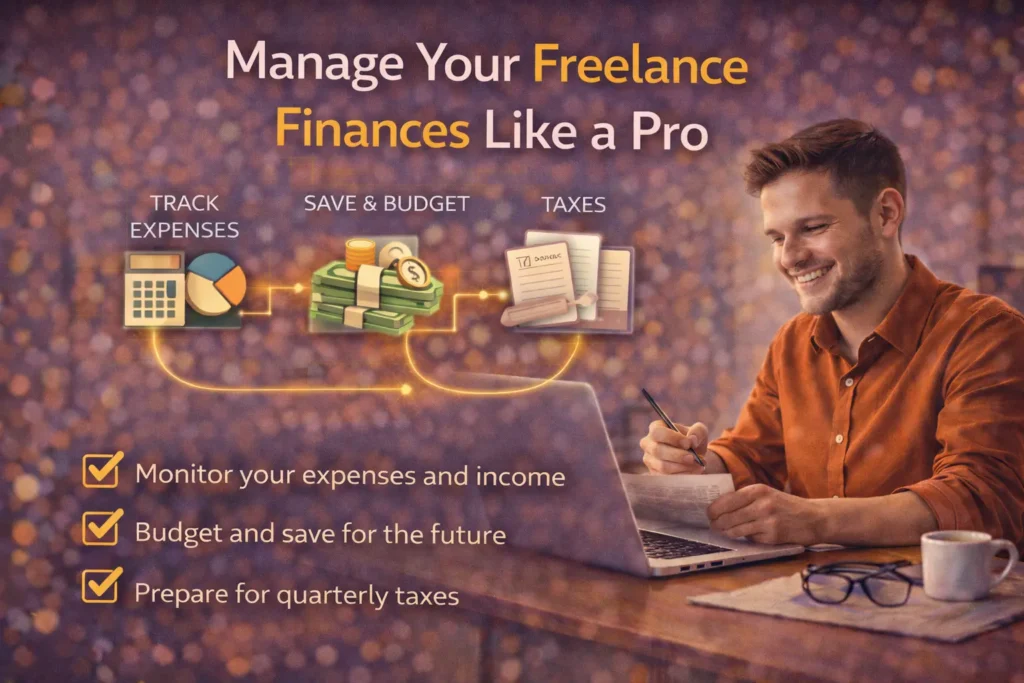
Manage Your Freelance Finances Like a Pro
Freelancing income fluctuates. Financial systems create stability.
Treat your freelance work like a business from day one.
Tax Planning
Unlike traditional employment, taxes are not automatically deducted.
Best practice:
- Set aside 20–30% of income for taxes (adjust based on your country)
- Track deductible expenses
- Consider consulting a tax professional
Never treat total incoming payments as disposable income.
Separate Personal and Business Accounts
Open separate bank accounts for:
- Business income and expenses
- Personal living expenses
This simplifies bookkeeping and improves financial clarity.
Separation creates discipline.
Follow the Emergency Fund Rule
Freelancing includes income fluctuations.
Maintain at least:
- 3–6 months of living expenses in savings
This safety buffer reduces stress during slow periods.
Use Finance Tools
Use reliable tools to manage income and expenses:
- QuickBooks for accounting
- FreshBooks for invoicing
- Spreadsheets for tracking
- Digital banking apps for expense monitoring
Financial visibility supports confident decision-making.
Use AI as an Advantage (Not a Threat) in 2026
AI is transforming freelancing — but it is not replacing skilled professionals.
It is replacing inefficient workflows.

AI Tools for Freelancers
Use AI to improve efficiency in:
- Research
- Content drafting
- Data analysis
- Brainstorming
- Coding assistance
- Workflow automation
AI accelerates execution. Strategy remains human.
Differentiation Strategy
Anyone can generate basic output with AI.
Few can:
- Develop strategy
- Interpret data
- Understand business context
- Communicate persuasively
Position yourself as a strategist, not just an executor.
The Human Advantage Model
Human strengths remain powerful:
- Emotional intelligence
- Creative thinking
- Strategic judgment
- Client communication
- Contextual understanding
AI enhances work. Humans provide direction.
Strategic Positioning in the AI Era
Instead of competing with automation:
- Use AI to increase efficiency
- Deliver faster turnaround times
- Focus on higher-level problem solving
- Offer strategic insights beyond execution
Freelancers who combine AI tools with strategic thinking increase both income and leverage.
Keep Learning to Stay Competitive
Markets evolve quickly. Skills must evolve faster.
Continuous improvement is a competitive advantage.

Upgrade Core Skills Annually
Each year, improve at least one major skill.
Examples:
- Advanced SEO
- Conversion optimization
- Paid advertising strategy
- Data analytics
- AI integration
Compounding skill development increases pricing power.
Earn Relevant Certifications
Certifications:
- Increase perceived credibility
- Strengthen LinkedIn profiles
- Improve proposal success rates
Choose certifications aligned with your niche, not generic credentials.
Maintain Competitive Awareness
Regularly review:
- Top freelancers in your niche
- Pricing benchmarks
- Service positioning
- Emerging specializations
Study competitors to improve — not copy.
Monitor Industry Trends
Stay informed through:
- Industry newsletters
- Platform updates
- Market reports
- Tool innovations
Awareness prevents stagnation.
Build Personal Brand Authority
Authority attracts clients before you pitch.
When clients perceive you as an expert, selling becomes easier.

Content Strategy
Create consistent content that demonstrates expertise:
- Case studies
- Industry analysis
- Strategic breakdowns
- Lessons learned
- Performance insights
Educational content builds trust.
Authority Positioning
Instead of presenting yourself as “just a freelancer,” position yourself as:
- Consultant
- Specialist
- Strategist
- Advisor
Language influences perception.
Authority increases perceived value.
Visibility Channels
Build presence on:
- LinkedIn
- Personal website
- Email newsletters
- Industry communities
Visibility compounds over time.
LinkedIn Growth Strategy
On LinkedIn:
- Post weekly insights
- Share results from projects
- Comment strategically on industry posts
- Optimize headline and profile summary
LinkedIn remains one of the strongest platforms for attracting high-paying freelance clients.
Know When to Say No
Not every opportunity is worth accepting.
Protecting your time and reputation is essential for long-term growth.

Red Flags to Watch For
- Unrealistic deadlines
- Extremely low budgets
- Vague project scope
- Reluctance to sign contracts
- Poor communication
Early warning signs rarely improve later.
Toxic Client Indicators
Avoid clients who:
- Disrespect boundaries
- Constantly change requirements
- Refuse upfront payment
- Micromanage excessively
Professional respect must be mutual.
Scope Creep Management
If a request falls outside the agreed scope:
Respond with:
“That request is outside the original agreement. I’m happy to provide an updated quote.”
Clear boundaries protect profitability.
Professional Exit Strategy
If collaboration becomes unsustainable:
- Provide written notice
- Complete agreed deliverables
- Maintain professionalism
- Avoid emotional responses
Reputation matters long-term.
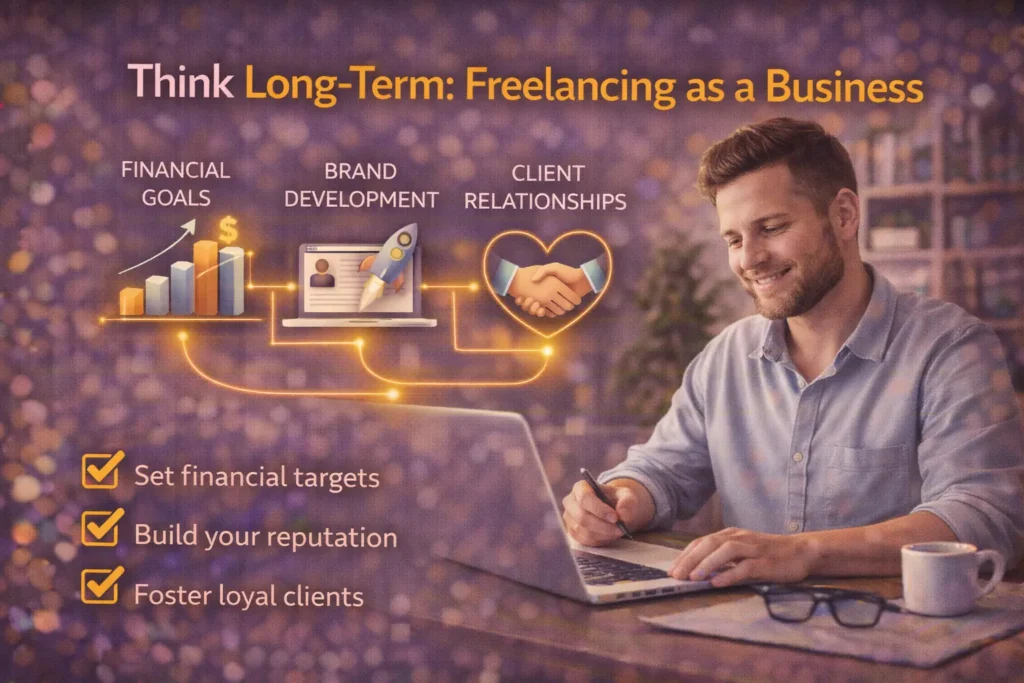
Think Long-Term: Freelancing as a Business
Freelancing becomes powerful when you stop thinking in projects and start thinking in systems.
The highest-earning freelancers operate like business owners — not gig workers. They build assets, optimize processes, and focus on long-term scalability instead of short-term income.
Scaling Options
-
Freelance income scales through strategy, not just effort.
Common scaling paths include:
- Increasing rates as expertise grows
- Offering higher-value service packages
- Shifting from hourly to retainer-based pricing
- Specializing further in a profitable niche
- Adding consulting or strategy layers
Scaling requires positioning, not just more hours.
- Increasing rates as expertise grows
Subcontracting and Delegation
Once demand increases, consider subcontracting parts of execution.
For example:
- Outsource design while you manage strategy
- Delegate research or editing
- Hire virtual assistants for administrative tasks
This allows you to move from operator to manager — increasing leverage and reducing burnout.
Creating Digital Products
Digital products allow income beyond client work.
Examples include:
- Templates
- Online courses
- Framework guides
- Toolkits
- Workshops
Digital assets generate revenue without requiring constant time exchange.
Add a Passive Income Layer
While freelancing is typically active income, you can build passive layers by:
- Selling digital downloads
- Offering subscription resources
- Creating paid communities
- Publishing monetized content
Diversification reduces dependency on client work.
Adopt an Asset Mindset
Instead of trading time for money, focus on building assets:
- A strong personal brand
- A portfolio of results
- Recurring client relationships
- Digital products
- Automated systems
Assets compound. Time does not.
Freelancing becomes significantly more profitable when you treat it as a scalable business.
Frequently Asked Questions About Freelancing Tips
What are the best freelancing tips for success?
The best freelancing tips focus on specialization, value-based pricing, consistent client acquisition, strong communication, and systemized workflows. Freelancers who treat their work like a business — rather than a side hustle — achieve long-term income stability and better client quality.
How do freelancers increase income?
Freelancers increase income by raising rates strategically, shifting to project or retainer pricing, specializing in high-demand niches, improving negotiation skills, and building recurring revenue streams. Increasing perceived value often leads to higher earnings without increasing workload.
How can I get high-paying freelance clients?
High-paying clients are attracted through strong positioning, measurable proof of results, authority building (especially on LinkedIn), and targeted outreach. Instead of offering generic services, focus on solving specific business problems for a clearly defined audience.
When should I raise freelance rates?
You should raise your rates when demand increases, your schedule is consistently full, you deliver measurable results, or your expertise improves. Reviewing and adjusting rates every 6–12 months ensures your pricing reflects your current value.
Is freelancing profitable in 2026?
Yes, freelancing remains profitable in 2026 for professionals who specialize, use AI strategically, and build authority in their niche. Competition has increased, but freelancers who combine skills with systems and positioning continue to grow sustainably.
Build a Sustainable and Profitable Freelance Business
Freelancing success in 2026 is not about working more hours — it is about working with strategy.
By defining a clear niche, building a results-driven portfolio, systemizing client acquisition, pricing for value, and thinking long-term, you move from unstable gigs to predictable growth.
The freelancers who succeed are those who think like entrepreneurs.
If you are just starting your journey, explore our complete guide on How to Start Freelancing to build a strong foundation.
To increase your market value, review the most in-demand Freelancing Skills to Learn this year.
And to protect and manage your income wisely, read our practical Finance Tips for Freelancers.
Start strategically. Improve consistently. Think long-term.
Your freelance career becomes powerful the moment you treat it like a real business.
Related Articles

Types of Freelancing in 2026 (Complete Guide for Beginners)
February 28, 2026
No Comments
Read More »

How to Start Freelancing in 2026 (Step-by-Step Beginner Guide)
February 28, 2026
No Comments
Read More »
Best Freelancing Platforms in 2026 – Complete Guide & Expert Tips
February 28, 2026
No Comments
Read More »

Fiverr Freelancing Tips for Beginners – How to Get Your First Order in 2026
February 26, 2026
No Comments
Read More »

How to Freelance in Different Life Situations (Students, Parents, Entrepreneurs)
February 26, 2026
No Comments
Read More »